When No One Is Sleeping Well, Everything Feels Harder
When sleep breaks down in a household, the effects rarely stay contained to the night. Patience shortens, small problems feel heavier, and even ordinary routines require more effort than they should. Sleep deprivation changes how the whole home feels.
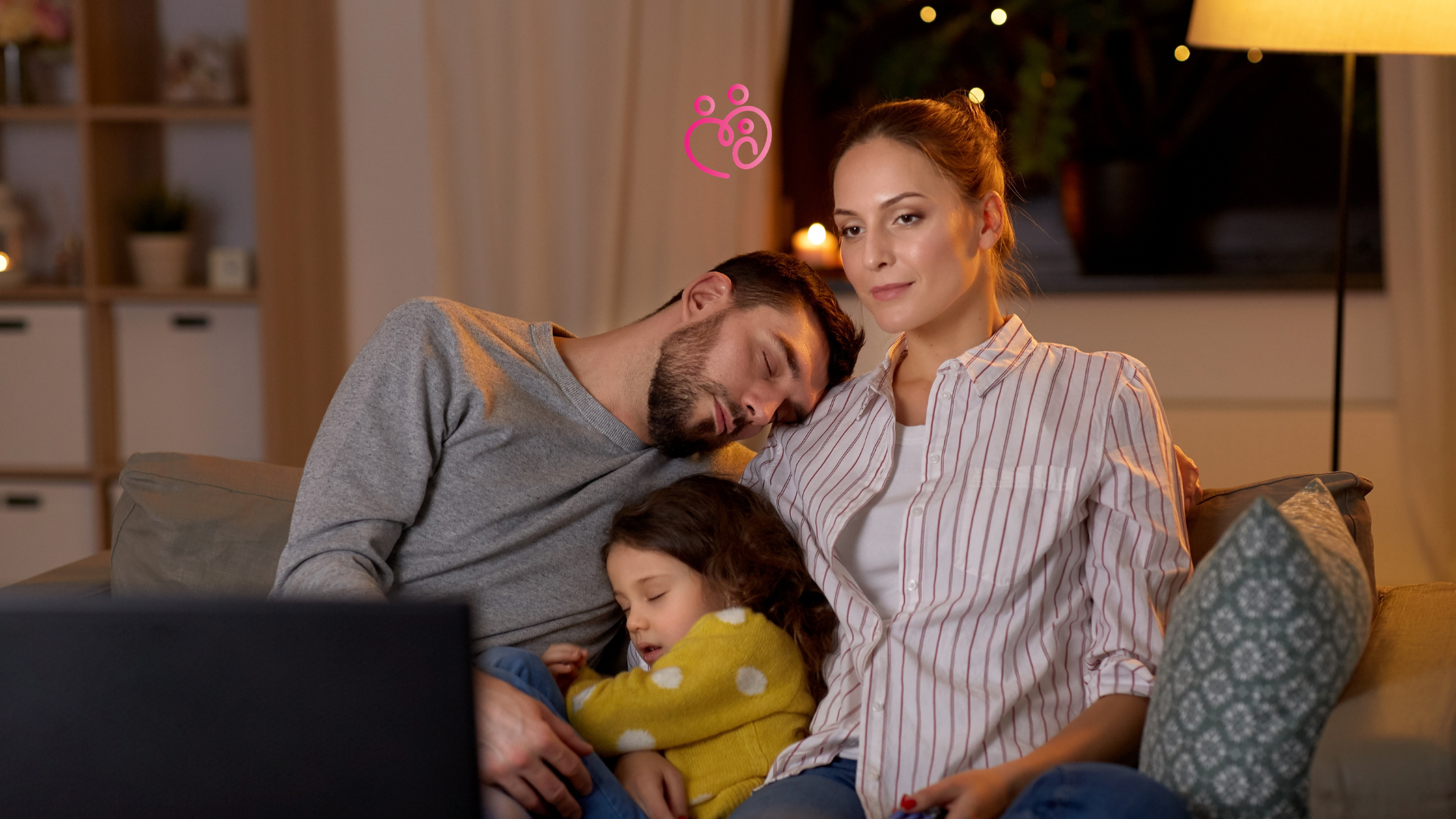
You can usually tell when a household is running low on sleep.
Not because anyone says it directly.
Because ordinary things start feeling unusually difficult.
A delayed bedtime becomes a tense conversation. A minor mess feels disproportionately frustrating. A small request lands with more weight than it normally would.
Nothing about the individual moment explains the reaction. The exhaustion does.
This is what sleep deprivation in family life often looks like. Not dramatic collapse. Just a noticeable reduction in patience, flexibility, and emotional margin.
Some links are affiliate links. We may earn a small commission at no extra cost to you. We only recommend things we'd use ourselves.
Why Sleep Changes More Than Energy
Most people think of sleep as physical recovery.
In family life, sleep is also emotional infrastructure.
When adults are under slept, the threshold for frustration lowers. Decision-making becomes slower. Emotional regulation becomes harder. Small disruptions that might normally be manageable begin to feel more invasive.
The same applies to children.
A 2024 review in Sleep Medicine found that insufficient sleep in children is associated with increased emotional reactivity, reduced self-regulation, and more frequent behavioral difficulties. These changes are often interpreted as attitude or resistance, when exhaustion may be a major contributing factor.
This is one reason sleep-related household stress becomes cyclical.
A tired child struggles more at bedtime. A tired parent has less patience to navigate it calmly. The following day begins with less recovery than needed, which makes the next evening harder.
The problem compounds because no single night feels like the defining issue. It is the accumulation that changes the household atmosphere.
The Hidden Cost of Emotional Depletion
Sleep deprivation does not just make people tired. It narrows emotional bandwidth.
That narrowing changes how ordinary family life feels.
A request for help while you are already stretched becomes irritating instead of neutral. A sibling disagreement feels harder to mediate. A minor delay feels more disruptive than it objectively is.
Researchers in Nature Human Behaviour (2025) found that poor sleep significantly affects emotional responsiveness and interpersonal interactions, particularly in environments requiring sustained caregiving and repeated decision-making.
Parents often assume the problem is patience.
Sometimes the problem is capacity.
That distinction matters because the solutions are different.
Trying harder rarely restores emotional margin.
Recovery does.
When Sleep Struggles Affect the Whole Home
Sleep challenges rarely stay isolated to the person struggling.
An infant waking repeatedly changes the household rhythm. A toddler resisting bedtime shifts evening energy. An older child with inconsistent sleep habits can affect morning routines, school preparation, and the emotional tone of the day.
Everyone adapts around sleep disruption.
Over time, this adaptation becomes normalized, even when it is quietly draining everyone involved.
This is where structure can help.
Not rigidly.
Not as a promise of perfect sleep.
Just enough predictability to reduce some of the friction that grows around difficult sleep phases.
One Practical Starting Point
Baby Sleep Miracle is one structured program some parents explore during challenging sleep seasons. It focuses on creating more consistent sleep routines and parent-led strategies rather than positioning itself as an instant solution.
For families looking for practical support, the simpler tools are often familiar ones: a white noise machine that creates a stable sleep environment, blackout curtains that reduce early waking disruptions, or bedtime books that reinforce a predictable evening rhythm.
None of these solve every sleep challenge.
They simply create conditions that make better sleep more likely.
And when sleep improves even slightly, the emotional tone of the household often changes with it.
Rest Changes the Shape of the Day
Not every hard day is caused by poor sleep.
But poor sleep makes many hard days harder.
This is why sleep deserves attention beyond bedtime itself.
It affects patience. Focus. Emotional resilience. The ability to absorb the normal friction of family life without feeling overwhelmed by it.
You do not need a perfect sleep system.
You need enough recovery to create margin again.
Sometimes the most useful question is not “Why am I so impatient today?”
Sometimes it is “How rested is everyone, really?”
Last week, we looked at how constant interruptions quietly drain household energy over time. If that feels familiar, When Interruptions Stack: Why Parents Feel So Drained connects closely with this conversation.
And if reflections like this are useful, Family Picks Weekly shares one practical family-life perspective each week through the newsletter.